When parents search for a dentist for their infant, they are often focused not only on treatment but also on trust, comfort, and safety for their child. At this early stage, the experience matters far more than the procedure itself.
At Kid Friendly Dentistry, we understand that a child’s first dental visit with an infant dentist can leave a lasting emotional impression. A positive, gentle introduction builds confidence, while a stressful one may lead to lifelong dental fear. That first visit often shapes how children respond to dental care in the future.
The first visit is more than a checkup
A child’s first interaction with an infant dentist is not just about teeth; it’s about building familiarity. If the experience feels rushed, cold, or unfamiliar, children may start associating dental care with fear.
At this stage, even simple things like the sound of instruments or the smell of a clinic can feel overwhelming. That is why the environment, tone of communication, and approach all matter just as much as clinical expertise.
We focus on slowing the experience down so children feel safe enough to explore and ask questions in their own way.
Many parents don’t realize that a child’s memory forms quickly around emotional experiences. A gentle or stressful first visit can influence whether a child becomes cooperative or anxious in future dental care. This is where choosing the right dentist for their infant becomes critical.
How fear begins without warning
Dental fear does not usually start with pain. It often begins with uncertainty. When a child does not understand what is happening, their imagination fills the gap.
An infant dentist plays an important role in reducing that uncertainty. Simple explanations, calm behavior, and friendly communication help children feel in control.
We often see that fear develops when children feel they are being rushed or not listened to. Even small gestures, like allowing a child to touch safe tools or explaining steps in simple words, can completely change their response.
If the first visit is handled without patience, the child may carry that discomfort into adulthood. This is why early care should never be treated as routine; it should be treated as emotional foundation-building.
The long-term impact of early dental experiences
The influence of an infant dentist goes beyond childhood. Studies in behavioral dentistry consistently show that early dental experiences affect adult dental anxiety levels.
A child who feels safe during their first visits is more likely to:
- Maintain regular dental checkups
- Communicate openly about discomfort
- Avoid severe dental problems later in life
On the other hand, a negative experience can lead to avoidance. Many adults who delay dental care trace their fear back to childhood visits that felt overwhelming or painful.
We believe prevention includes emotional care as much as oral care. When children feel respected and understood, they build trust that lasts.
What a child-friendly first visit should look like
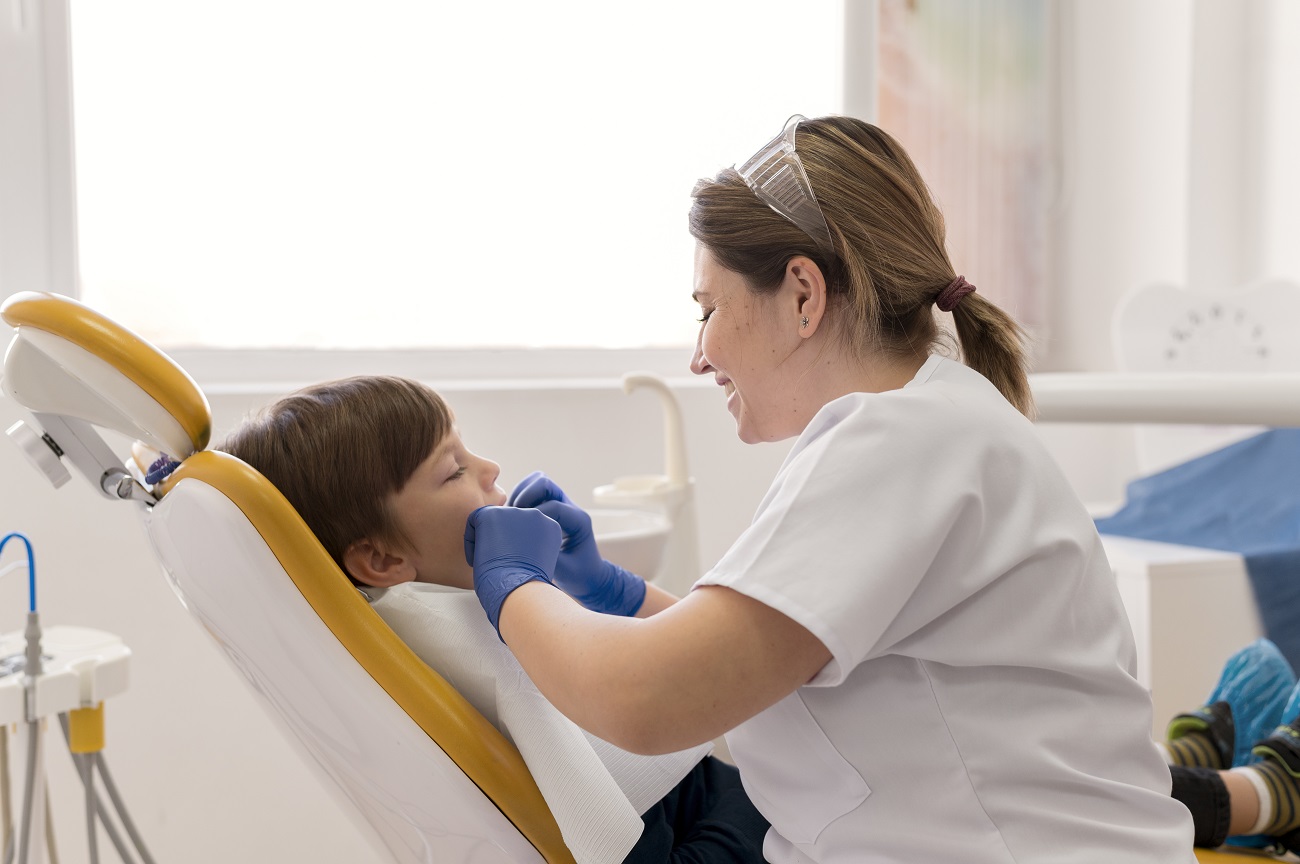
A proper visit with an infant dentist should never feel like a rushed medical procedure. Instead, it should feel like a guided introduction.
The visit usually includes:
- A gentle introduction to the dental chair and surroundings
- Simple explanations of tools in child-friendly language
- A light oral examination without pressure
- Positive reinforcement and reassurance
At Kid Friendly Dentistry, we also encourage parents to stay involved during the visit. This helps children feel secure and reduces separation anxiety, especially in younger age groups.
The goal is not to complete treatment quickly, but to make the child comfortable enough to return without fear.
Why choosing the right specialist matters
Not every dental provider is trained to handle early childhood behavior. An infant dentist requires more than technical knowledge; they need patience, communication skills, and emotional awareness.
Children respond differently depending on tone and approach. A calm voice, gentle instructions, and a non-threatening environment can determine whether a child cooperates or resists.
We often remind parents that the right provider is not just someone who treats teeth, but someone who understands childhood behavior.
We prioritize this approach because we know that trust is built, not demanded. Every child reacts differently, and a good dental experience adapts to those differences.
Parents play a key role in shaping the experience
While an infant dentist guides the clinical process, parents shape the emotional readiness before the visit even begins.
Children often mirror their parents’ emotions. If a parent feels anxious, the child may feel the same way. Speaking positively about the visit, avoiding negative words like “pain” or “hurt,” and staying calm can make a major difference.
We guide parents on how to prepare their child before the appointment so the experience starts on a positive note even before they walk into the clinic.
When parents and dental professionals work together, the child benefits the most.
Building trust that lasts beyond childhood
A good experience with an infant dentist is not just about one appointment; it sets the tone for lifelong oral health habits.
Children who trust their dentist are more likely to:
- Report early signs of discomfort
- Avoid unnecessary dental complications
- Develop consistent hygiene routines
We aim to build that trust early so that dental care becomes a normal and stress-free part of life, not something to fear or avoid.
When children feel safe in the dental chair, they grow into adults who prioritize their oral health without hesitation.
Conclusion
A child’s first dental experience is more important than most parents realize. The role of an infant dentist goes far beyond treatment; it shapes how a child feels about dental care for years to come. With the right approach, that first visit can become a positive memory instead of a fearful one.
At Kid Friendly Dentistry, we believe early experiences should build confidence, not anxiety. When children feel understood, supported, and comfortable, they carry that confidence into every future stage of their oral health journey.
